
Sector: UK Tourism & Holiday Accommodation | Client: Confidential
A UK holiday accommodation provider wanted to improve its online visibility and attract prospective guests searching for specific experiences rather than simply a place to stay.
The opportunity was to connect the business with an audience interested in countryside holidays and specialist activities, using relevant, informative content that matched their search intentions.
At Steak Festival, we developed a targeted digital content strategy focused on understanding what potential visitors were looking for and presenting the accommodation in a way that addressed those needs.
The work included:
Audience research: Identifying relevant search behaviour and opportunities for more focused content.
Content development: Creating a dedicated landing page around a specific visitor interest and its connection to the accommodation.
Search optimisation: Improving page structure, headings, metadata and content relevance.
Technical delivery: Implementing the content within the existing website and ensuring it worked across devices.
Performance monitoring: Using Google Search Console to evaluate organic visibility, engagement and search performance.
To evaluate the effectiveness of the digital content strategy, we developed a reporting approach combining Google Search Console performance with website enquiry data.
Between 1 May and 28 October 2026, the website recorded 2,426 organic search clicks, representing a 742.4% increase compared with the preceding reporting period. Search impressions increased by 1,106.2%, reaching 38,793.
The enquiry reporting system also recorded 314 unique enquiries from 353 submissions during the selected period, with duplicate submissions identified and excluded from the unique enquiry total.
By bringing these datasets together, we could assess search visibility, audience engagement and enquiry activity, identify patterns and provide evidence-led recommendations for future content development.
The reporting supported subsequent work targeting seasonal visitor interests and opportunities to improve engagement during quieter booking periods.
Reporting period: 1 May–28 October 2026. Search metrics are sourced from Google Search Console; enquiry figures are based on website form submissions. These datasets are reported alongside one another and do not establish direct conversion attribution.
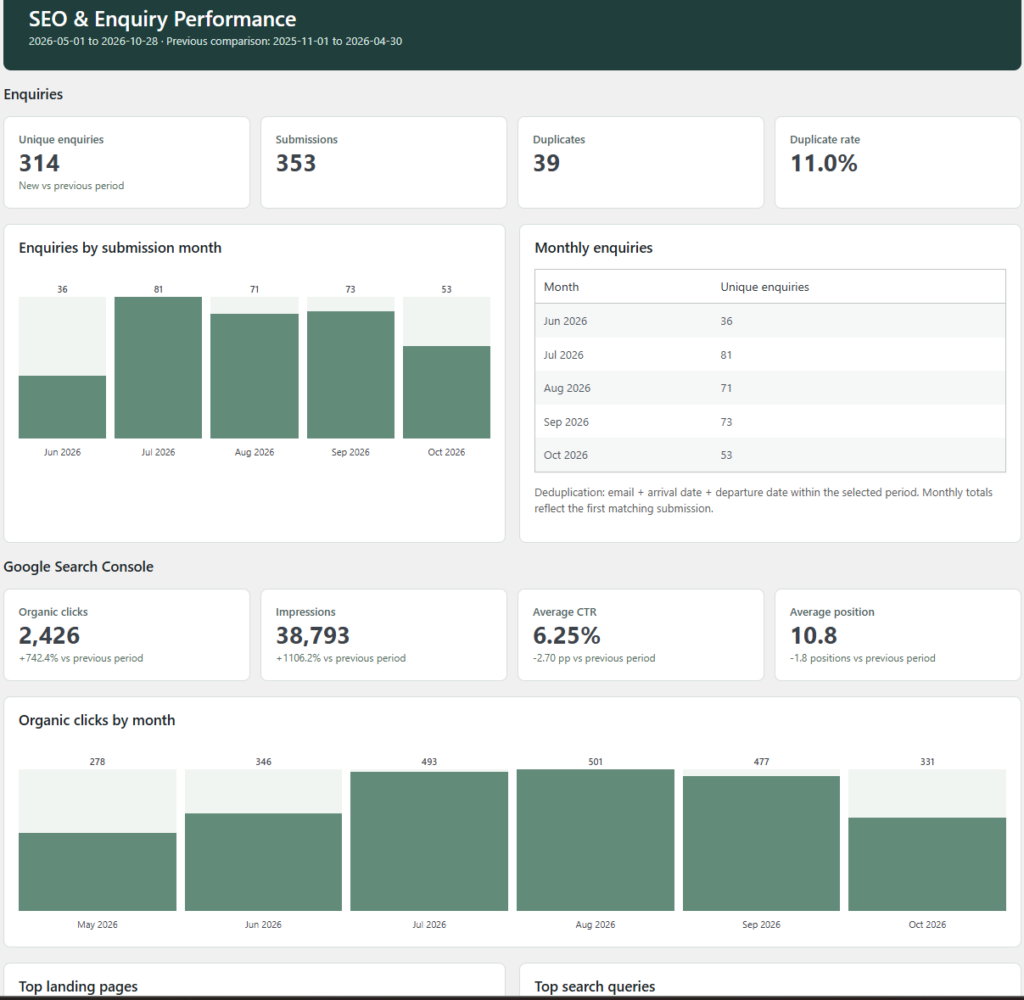
Performance reporting helped identify which topics and search queries were attracting relevant visitors.
These insights informed subsequent recommendations for additional seasonal content, including winter breaks and holiday-period accommodation, to support demand outside the main booking season.
This created an ongoing cycle of content planning, publication, measurement and refinement.
Digital communications: Audience-focused content, copywriting, landing-page development and publishing.
Analytics and insights: Google Search Console, performance interpretation and reporting.
Technical delivery: Website development, SEO, responsive design and content optimisation.
Strategic planning: Using audience behaviour and performance evidence to inform future communications.
The project illustrates how targeted digital communications, supported by technical delivery and meaningful analytics, can help a specialist organisation connect with the audiences most relevant to its objectives.
Rather than treating SEO as an isolated technical activity, the approach combined audience understanding, content creation and measurable performance to support broader business goals.
This case study has been anonymised to respect client confidentiality. Performance figures are taken from campaign reporting and are presented without disclosing client-identifying or commercially sensitive information.